
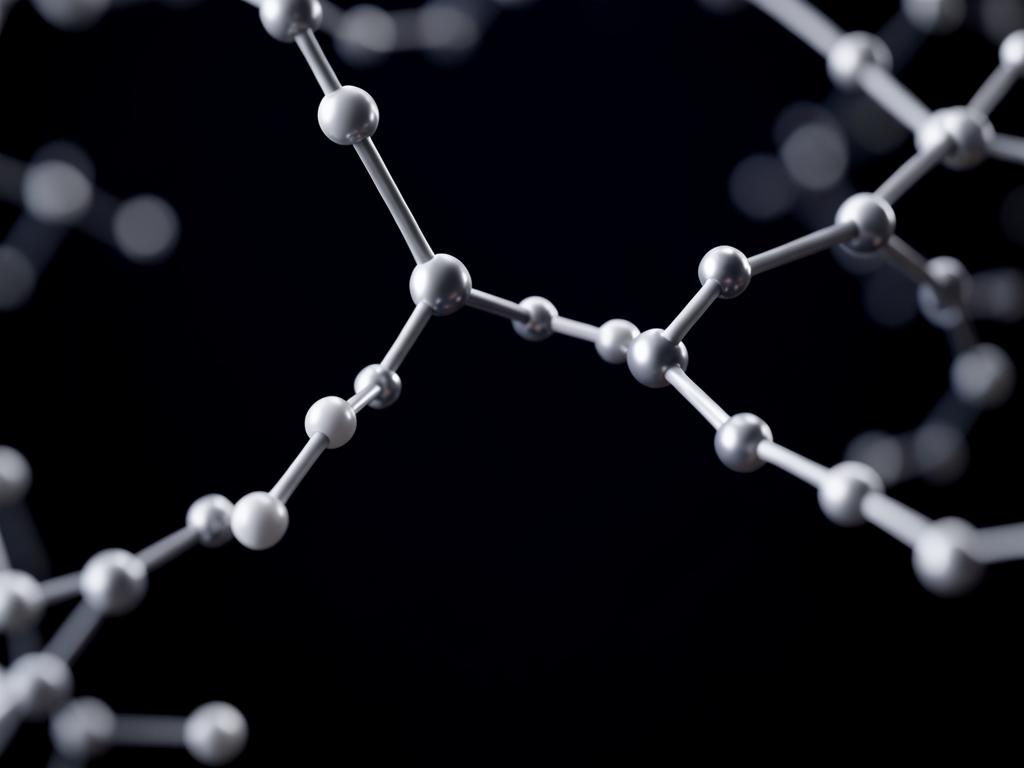
What are peptides?
Short chains of 2–50 amino acids linked by peptide bonds — found in the body or made in laboratories.
Science & Quality
At PURE, research materials should be supported by clear documentation, validated testing, and responsible sourcing. This page explains how peptides work, how they are tested, what our quality standards are, and how to evaluate the information you find online.

Research Use Only
Laboratory research purposes exclusively.
Batch Transparency
Batch records presented when available.
Quality Focused
Materials selected for qualified research.
U.S. Based
Independent research-materials company.
The science
Peptides are short chains of amino acids that play key roles in biological processes. Learn how they work, the different types, and their research applications.
What are peptides?
Short chains of 2–50 amino acids linked by peptide bonds — found in the body or made in laboratories.
How peptides work
A peptide binds to a specific receptor, triggering signals that change how cells behave.

Research applications
Cell biology, neuroscience, immunology, metabolism and regenerative research.
Our approach
Our end-to-end approach helps ensure the materials you receive are what they are intended to be. Quality is more than a single test result — it's sourcing, testing, documentation, handling, and transparency together.
Qualified sourcing
Work with reputable suppliers and established manufacturing partners.
Analytical verification
Identity, purity, and content tested using recognized methods (MS, HPLC, assay).
Batch documentation
COAs and supporting records provided when available.
Careful storage
Proper storage, packaging, and chain of custody.
Understanding testing
Different analytical methods answer different questions. Learn what identity, purity, and content testing can tell you, and the limits of each method.
Mass spectrometry (MS)
Confirms the molecular weight and helps verify identity — that a peptide matches the expected sequence.
Before you buy any research peptide, ask these five questions.
Is the identity verified?
Is the material actually the peptide it is represented to be?
Look for: Appropriate identity testing such as mass spectrometry.
Is purity actually measured?
Is the stated purity supported by an analytical method?
Look for: HPLC or another appropriate chromatographic method.
Does the COA match the exact batch?
Does the documentation correspond to the actual lot you're purchasing?
Look for: Product name, batch/lot number, test date, specifications and actual results.
Who performed the testing?
Can you identify the laboratory and understand what testing was performed?
Look for: Identifiable laboratories and appropriate credentialing where applicable.
Can you actually see the results?
Don't simply accept "third-party tested."
Look for: Accessible documentation showing what was tested, how it was tested, and the reported results.
Reliable results
Quality-controlled materials help reduce unnecessary variables in research.
Data integrity
Consistent material characteristics make results easier to interpret and reproduce.
Research confidence
Knowing what was tested — and how — gives researchers greater confidence.
Time & cost
Poor-quality materials can create failed experiments and wasted resources.
Documentation
Batch-specific analytical information creates a record researchers can review and retain.
Three different questions. All important.
Identity
Is it what it says it is?
Answered by methods like mass spectrometry.
Purity
What does the analytical method show about the material's purity profile?
Answered by methods like HPLC.
Content / assay
How much peptide is present according to the stated method?
Answered by quantitative assay methods.
One number cannot answer every quality question.
Our end-to-end approach to ensure the highest standards.
Raw material
Selection and documentation
Identity verification
Confirm the peptide
Purity analysis
Analytical characterization
Content / assay
Quantitative assessment against characterizations
Batch verification
Review results and specifications
Documented COA
Batch-specific documentation
Storage & handling
Protect material integrity through appropriate handling
Quality is the combination of appropriate testing, specifications, documentation, handling, and transparency.
Testing answers different questions.
Mass spectrometry
Molecular identity
HPLC / chromatography
Purity profile and related impurities
Assay / content
Quantity of peptide under the stated method
Microbial testing
Microbial contamination
Endotoxin testing
Bacterial endotoxin levels
Residual solvents
Relevant solvent residues
Heavy metals
Elemental / trace metal contaminants
Appearance
Physical characteristics
Stability testing
How the material changes under defined conditions over time
Testing is material- and specification-dependent. No single analytical test answers every quality question.
A Certificate of Analysis tells the story of your batch.
Product
What material was tested?
Batch / lot
Does it correspond to your material?
Method
How was it tested?
Specification
The acceptable range.
Result
The actual result.
Test date
When was the analysis performed?
Laboratory
Who performed the analysis?
PURE
Certificate of Analysis
| Test | Method | Specification | Result |
|---|---|---|---|
| Identity (MS) | Mass Spec | Matches reference | Pass |
| Purity (HPLC) | HPLC | ≥ 98% | 99.3% |
| Peptide content | Assay | ≥ 98% | 98.7% |
| Endotoxin (EU/mg) | LAL | < 1.0 | < 0.20 |
| Microbial count | USP | < 100 cfu/g | < 10 cfu/g |
Approved by: A. Reynolds · Date: 05/20/2024 · For research use only
A COA can help you understand:
A COA does not automatically establish:
Follow your batch
Scan
Scan the QR code on the vial.
Verify
Enter or confirm the batch number.
Review
View the corresponding COA and test results.
Understand
Review the methods, specifications, and results.
Research
Use the documentation as part of your research records.
What to look for in a peptide supplier
How to spot a weak quality program
Testing has limits
No single test answers every question. Mass spectrometry provides identity information. Chromatographic methods characterize purity and related compounds. Microbial and endotoxin testing answer different questions. Stability studies address stability under defined or simulated conditions.
Quality is the combination of appropriate testing, specifications, documentation, handling, and transparency.
The PURE research quality checklist
If you can't answer the questions, ask the supplier.
All PURE products and information are intended solely for laboratory research purposes. Not for human consumption.
Research Use Only
Laboratory research purposes exclusively.
Batch Transparency
Batch records presented when available.
Quality Focused
Materials selected for qualified research.
U.S. Based
Independent research-materials company.